

Animism is a Duty to the Earth
As the hyper–reality continues to destroy Fjörgyn, we must recognize the spirit in all things.

The contemporary world, dominated by industrialization and ushered in by the age of reason, has bequeathed humanity an untold number of gifts. From the invention of vaccination and germ theory, to the inter–networking of the human species, we live in an era both more enlightened and connected than ever before. But as we deepen our global connections we continue to lose connection to our locale. Alienation from one’s neighbor, from the soil beneath us, and the local bio-ecological region we live in has brought about an age where humanity has lost itself in its own inter–connections. Therefore, it is more important than ever to foster the regrowth of humanities connections to the Earth beneath our feet.
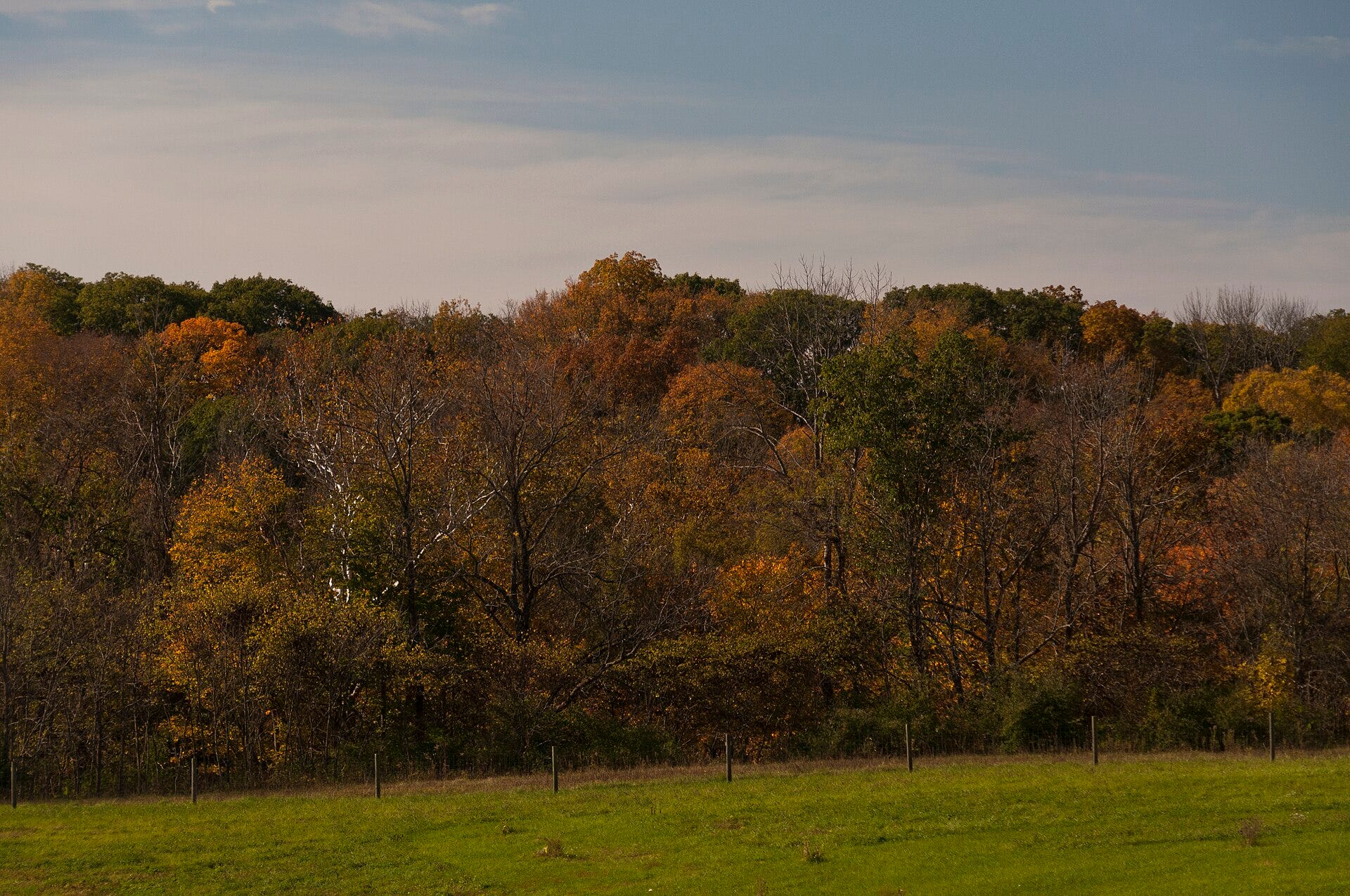
Humanity must regrow our roots if we are to properly steer away from climate disaster. These roots are what help us to touch the wights of the lands we live, forming relationships with them that are impossible through purely empirical practice. What these wights are is not of concern: Whether they are true spirits, as I believe, or philosophical constructs does not impact the importance they hold throughout our world. Whatever belief one holds need not hold up to the scrutiny of reason. As long as we can come together from our respective foundations, we can forge together to rekindle our connections to our local worlds.
The Hyper–Real and The Local
Before a deeper dive into animist beliefs can be taken, we should discuss the modern context that we navigate. Jean Baudrillard defines the hyper–reality as a reality birthed by simulated models with no origin. This hyper–reality pervades all aspects of modern life and is as metaphysical as it is unintentional by human actors. Our baseline reality is defined by simulacrums without a real: mass media, social statistics, mass manufacturing, to list only a few. Your unique individuality a statistic, your knowledge of the world secondary, and your belongings merely the output of a assembly line, creating duplicates of a uniform concept. Your existence, as well as my own, is predominantly defined by simulacrum.
As networked computing has gripped the world, so too has the grip of the simulacrums behind our baseless reality. The local has given way to the global, which has subsumed it entirely. Global issues impact the numerical statistics that represent people, a globalized sense of morality steer the eyes of humanity (Dillon et al.), and the local is revealed as a single strand in the living tapestry of the global hyper–reality. The death and rebirth of the local is seen as news outlets prioritize national news coverage over local information (Martin and McCrain), and local politics have come to model themselves after national politics in the United States (Butler and Sutherland).
While we may never be able to free ourselves of the hyper–reality, as doing so would preclude many advancements that are considered ridiculous to relinquish, perhaps we can instead influence it. By making a conscious return to the local—relegating the global to mere whispers—we may be able to reclaim a form of meaning that has been otherwise lost. Whether this meaning is real or merely birthed by the hyper–reality will not matter so long as it shifts towards the betterment of our locale, and the lives around us. This is where animist thought becomes most useful: If we refocus ourselves on the local, we must view more than merely the humans in which inhabit it.
Foundations of Animism
While the first use of the term animism stemmed from early anthropological efforts—in which the term was largely pejorative—it has since been adopted by many spiritual and religious groups to define their own beliefs (Harvey). This modern description of animism is oriented around the way we build relationships with the world around us. This could include creatures, flora, and the spirits of the world. Given the extremely vague definition of animism it should be of no surprise that it embodies much more than simply heathenry, but in fact encompasses a large amount of non-Abrahamic faiths.
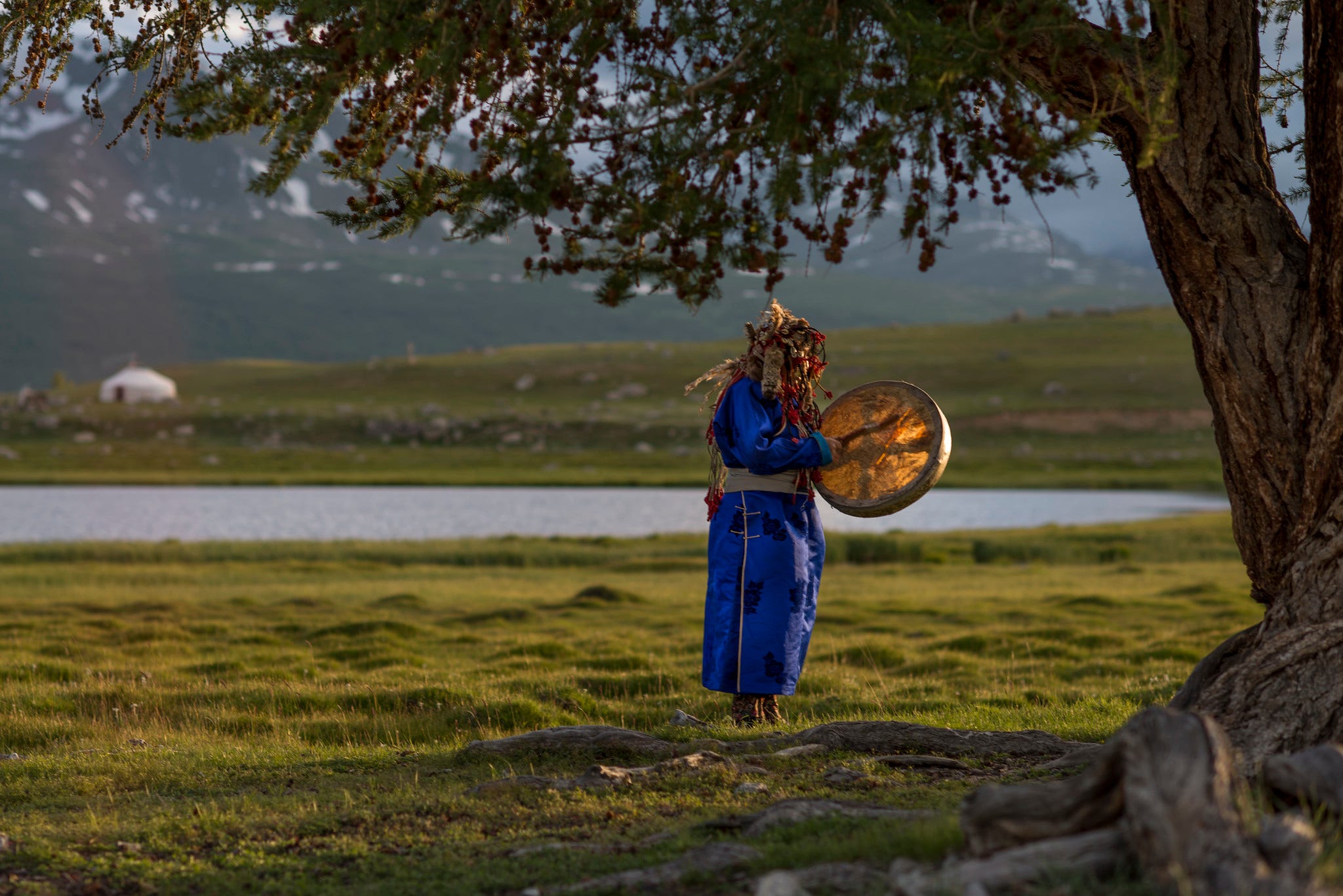
Theistic animism provides a powerful framework for how we interact with our local environment. Your home, your land, and all that sits upon it all hold their own spirit, or share a singular world–spirit. These spirit(s) are worthy of building relationships with: Performing rites and rituals in order to respect and worship them as well as yourself. In this perspective how could one ruthlessly destroy a forest, or poison a river, inhabited by those you have meaningful relationships with? Such actions are deeply anthropocentric, assuming we hold sole will over these lands. We must resist this perspective, irrespective of the fact that this will inhibit many modern concepts such as efficiency and growth.
However, despite the historical foundation of animism being firmly theistic, modern philosophy has argued for atheistic foundations that can also be of use. Ryan Doran’s argument of aesthetic animism discusses the idea that beauty confers the idea of sentience, and therefore innate moral qualities (10–11). This definition of animism can be used as a foundation in which animistic beliefs can exist in atheistic worldviews. Following this model, an atheistic animist would not believe in the literal embodiment of the world by spirits. Instead, they would adopt an anthropocentric view that accepts the moral standing of all things in the world. In this way, the relationship with the world stems from a need to find beauty in all things.
There are other proposals for atheistic animism however: Arianne Conty argues for a form of animism backed by scientific research showcasing the abilities and cognition of non-human beings. With this backing, the so named “machinic animism” embraces the ability of humanity to “see as another” to recognize and respect the world around us. This replaces the rational objectivity that has been ever–present in the modern Capitalistic and rational Western world with a subjective and sympathetic worldview. This shift in ontological perspective is far greater than Doran’s aesthetic animism, but far more powerful as well.
Regardless of which approach one takes to animism, the demand is the same: We must replace the focus on rational objectivism with personal subjectivity. Be it theistic or not, this subjectivity focuses our perspectives upon our local reality; shifting our ontology into one that begets a form of meaning both new and old. This new sense of being is naturally protective of Earth, and nature, just as one would protect friends or family. It must be stated however, that this ontological perspective is not new. Therefore, we cannot naively adopt a model of animism, we must grapple with history.
Reconnecting With History
We must know where we come from, including the practices and beliefs of our forebears. However, history is a trap explored by historians and exploited by fascists. History presently exists as a myth, a lost connection that comes as an immutable fact of our past (Baudrillard 43). These myths are then honored, celebrated through media as well as simulacrum of the traditions, and ownership is firmly established. If we are to move forward as animists, and as humans, we must release history back into the world and reconnect ourselves to it.
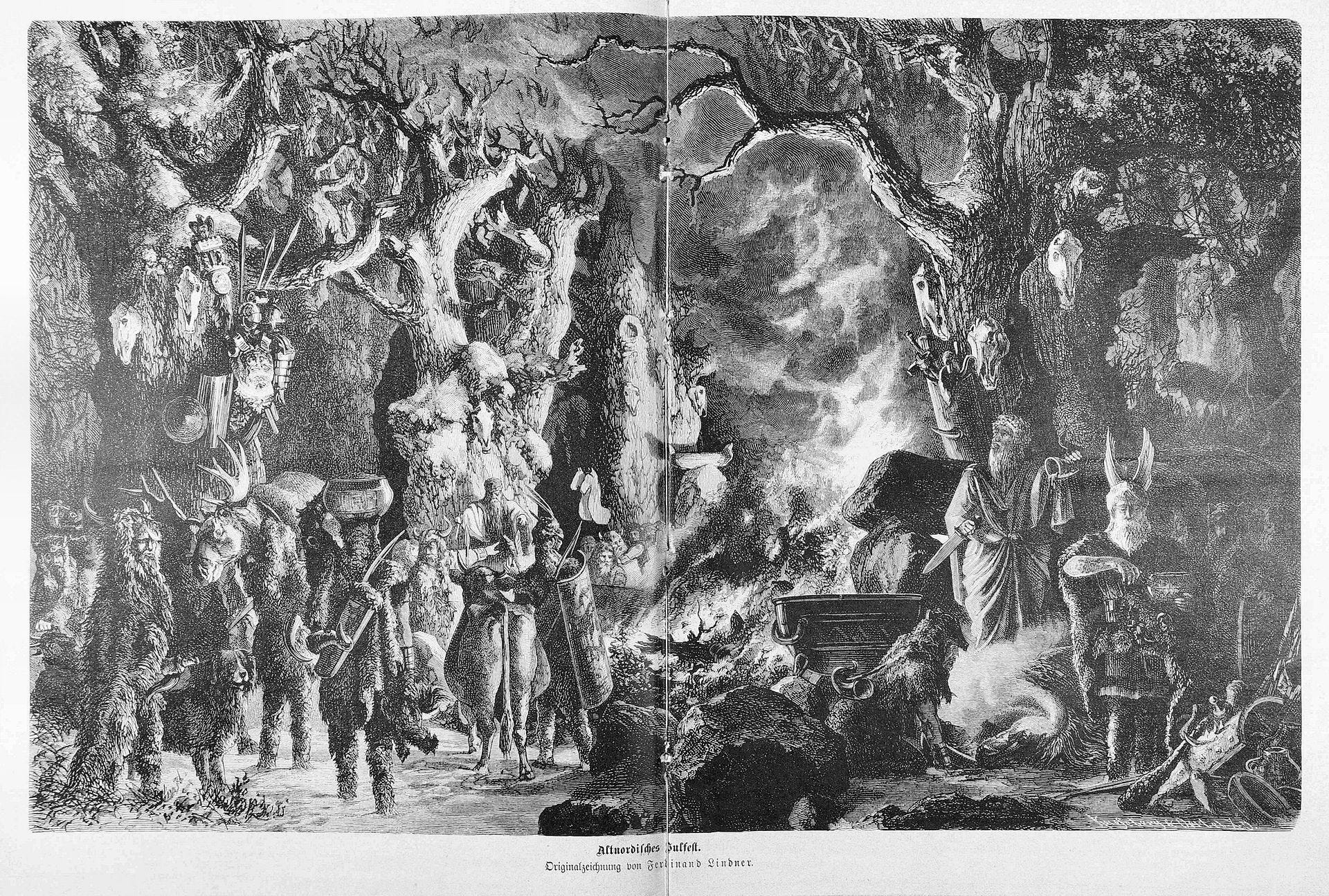
This comes with painful recognitions: Much of the new world rests on stolen land, and horrific offenses to the human spirit have yet to be truly recognized. I will not establish what would correct these, as it is not within my authority, but a true acceptance of them must first occur. With this acceptance comes the humility to engage with our history again, to allow wounds to heal, for history move forward after years of stagnation. Additionally, this acceptance mandates the inclusion of all voices to the table, and the dissolution of the power structures built upon the immutable myth. For one cannot build relationships with the spirits of the world, and forego building relationships with one’s neighbor.
More than the acceptance of historical wrongs, the acceptance of histories ability to change with us must too occur. This is not an excuse to appropriate other’s cultural norms into ones own life; but a reason to synthesize one’s own norms from the world around us, focused on the local. Just like how global shamanistic practices frequently share a multitude of qualities while remaining distinct (Kirkland 5-7), so too can new animistic communities worldwide. In this way we unlock history, allowing it to re-enter our lives in meaningful ways. It is important that it is said: Many people are already doing this, but society has yet to relinquish history towards this movement at large.
A Futurist Animism
As we elevate our locale into our lives, we must maintain a certain respectful universalist attitude. Many Neo-Pagan groups attribute membership towards folkish belonging. This model of exclusionary practice largely keeps with the death and reincarnation of history as immutable myth. Instead, we must be willing to meaningfully reflect upon the history that calls to us and synthesize our own with local reality. In doing so we do not merely build “constructed” cults of faith, we regrow ourselves into the soil beneath our feet.
In following with this belief: I am a North American heathen, not Norse, not Germanic, and as a result my faith has roots in many places. I forage and garden with respect to my local ecology, while I celebrate and worships the heathen gods. I honor my ancestors, just as I honor the wights of my home and my land. I am no more a god than the plants I nurture, or the winds in the tree of faith I have grown. I revere what I can from the past, but I ensure I am not bound to it.
Whatever foundation of animism you choose to follow, this universalism remains pivotal towards a future of reverence for the Earth. With this universalism comes the acceptance of other’s animistic belief systems. The shift towards subjectivity comes the understanding that we may all be correct, that the spirits of the world all hold their own moral ground. That our individual relationships with our locale, and the spirits therein, are all aligned with the same path of respect and reverence for life.
References
Baudrillard, Jean. Simulacra and Simulation. Ann Arbor, The University of Michigan Press, 1994.
Butler, Daniel M, and Joseph L Sutherland. “Have State Policy Agendas Become More Nationalized?” The Journal of Politics, 17 May 2022, https://doi.org/10.1086/720792.
Conty, Arianne. “Animism in the Anthropocene.” Theory, Culture & Society, vol. 39, no. 5, 30 Sept. 2021, p. 127-153, https://doi.org/10.1177/02632764211039283.
Dillion, Danica, et al. “National Politics Ignites More Talk of Morality and Power than Local Politics.” PNAS Nexus, vol. 3, no. 9, 1 Sept. 2024, https://doi.org/10.1093/pnasnexus/pgae345.
Doran, Ryan P. “Aesthetic Animism.” Philosophical Studies, 21 June 2022, https://doi.org/10.1007/s11098-022-01830-5.
Harvey, Graham. Animism: Respecting the Living World. London, Hurst & Co, 2005.
Kirkland, Dean. Seiðr Magic. Simon and Schuster, 2 Apr. 2024.
Martin, Gregory J, and Joshua McCrain. “Local news and national politics.” American Political Science Review, vol. 113, no. 2, 19 Feb. 2019, pp. 372–384, https://doi.org/10.1017/s0003055418000965.